
Last updated October 31, 2026
 Home additions & ADU
 Kitchen remodeling
 Bathroom remodeling
 Roofing
 Windows & doors
 Driveway & pavers
 Fence
Free written scope consultation - allowances, timeline, and change-order rules on paper before a single trade is scheduled
General Contractor Maintenance Checklist for Santa Cruz Homeowners
The marine layer that makes Santa Cruz summers so pleasant is the same moisture engine that quietly dismantles homes. Within a mile of Monterey Bay, salt-laden fog oxidizes flashing, degrades caulk joints, and feeds the fungal colonies that colonize fascia boards in 3 to 5 years, not the 10 that most product warranties assume. If you own property in Santa Cruz, your house is aging on an accelerated schedule compared to homes in Scotts Valley or San Jose. This guide is a trade-by-trade maintenance calendar calibrated to this specific climate. We walk through what actually fails, what to inspect and when, which maintenance items void your manufacturer warranties if skipped, and how a general contractor’s inspection differs from a homeowner walk-through.
Quick Answer
A Santa Cruz home maintenance checklist should be organized by trade, not by season: roofing and flashing every spring, siding and window seals every fall before the rains, fencing and hardscape in late summer when the ground is driest, and drainage twice a year regardless of weather. The highest-priority items for coastal homes are roof penetrations, exterior caulk joints, window weep holes, ground-contact fasteners, and any drainage path within 10 feet of a redwood tree. If you’d rather hand this to someone who looks at these failures daily, Spruce Contractors performs whole-property inspections in Santa Cruz and can put every trade under one maintenance plan.
Styles & brands we work with
Table of Contents
- Roofing: The Marine-Layer Damage Cycle
- Siding and Exterior Cladding: Where Moisture Gets In
- Windows and Doors: Seals, Weep Holes, and Marine Corrosion
- Fencing and Ground-Contact Hardware
- Hardscape and the Redwood Root Problem
- Drainage: The System Most Homeowners Notice Too Late
- Warranty-Voiding Maintenance Items You’re Probably Skipping
- What a General Contractor Catches That a Homeowner Misses
Roofing: The Marine-Layer Damage Cycle
Roof damage in Santa Cruz rarely announces itself with a dramatic leak. It announces itself with a rusted nail, a lifted shingle tab, a piece of flashing that’s gone from galvanized silver to dark oxide brown. The marine layer deposits salt and holds moisture against roofing materials for hours every morning during the summer months. That moisture works into nail holes, under shingle edges, and along the seams of pipe boots and vent collars. By the time water stains appear on a ceiling, the water has usually been traveling through the roof assembly for months.
When we inspect a roof in Santa Cruz, here’s the order of operations we follow. It’s the same sequence a homeowner can use for a basic seasonal check, but the professional version involves lifting shingles and looking where water would actually travel.
- Walk the roof perimeter from a ladder first. Look at the drip edge and the bottom course of shingles or tiles. Coastal corrosion shows up at metal edges first. If the drip edge is rusting through, the rest of the roof’s metal components are not far behind.
- Inspect every pipe boot, vent collar, and skylight curb. These are the high-failure points in marine air. Rubber pipe boots crack and dry out faster in Santa Cruz than in inland climates. The sealant around vent caps and skylights degrades from UV exposure that’s amplified by fog reflection.
- Check step flashing where the roof meets siding or a chimney. This is the most common source of slow, invisible water intrusion we find in coastal homes. The flashing itself may be intact, but the sealant at the top edge has separated from the siding, leaving a hairline gap that wicks water in.
- Clear valleys and gutters even if no trees overhang the roof. Fog-saturated pine needles and redwood duff accumulate in roof valleys and stay wet for weeks. That organic material holds moisture against shingle seams and accelerates granule loss.
For homeowners who want to know what roofing brands hold up in this climate, we specify GAF, CertainTeed, Owens Corning, and Atlas depending on the performance tier and warranty the homeowner wants. GAF-certified installation, as one example, means the manufacturer’s warranty travels with the roof, which matters if you ever sell. But even the best roof degrades faster within a mile of the ocean, so the maintenance schedule is what protects you. Inspect twice a year: once in March before the fog season intensifies, and once in October after the first significant rain.
Siding and Exterior Cladding: Where Moisture Gets In
Siding failures in Santa Cruz don’t start with the siding itself. They start with the caulk joints, the horizontal trim boards, and the spots where two different materials meet. The daily expansion and contraction from fog-to-sun cycles pulls caulk away from surfaces. Once a joint opens, capillary action does the rest. Water moves into the gap and sits against the wall sheathing, and from there the damage is slow and structural. We say this often: the caulk joint you can see is almost never where the rot is. The rot is behind it.
If you have James Hardie fiber cement siding, you have a product that was engineered for moisture exposure. But even Hardie requires proper installation details and ongoing maintenance at the trim and window interfaces. The boards themselves will not rot, but the house wrap, flashing, and sheathing behind them will if water gets past the exterior skin.
Here’s the siding inspection checklist for Santa Cruz homes, specifically for the marine-exposed zones on the west and south elevations that face the bay:
- Run a finger along every caulk joint at window and door trim. If it’s pulling away from either surface, if it’s cracked, or if it feels spongy, it needs to be removed and replaced, not smeared over. New caulk over failed caulk does nothing.
- Look at the bottom course of siding where it meets the foundation or the deck ledger. This is where splash-back from rain and irrigation keeps the material wet. Even rot-resistant siding products fail at this transition if the gap is too tight or the flashing is missing.
- Check horizontal surfaces. Window sills, trim boards on top of doors, the tops of belly bands. Any surface that can hold water for more than a few hours is a rot candidate. In fog zones, that’s daily holding water, not just after rain.
- Inspect the gable ends and the underside of eaves. Fascia boards and soffits in Santa Cruz often fail before the siding does because fog saturates the paint film and never lets it dry. Peeling paint on a fascia board is the first visible sign of fungal growth in the wood behind it.
Paint is your first line of defense, but it’s a maintenance coat, not a structural fix. A south-facing wall within a quarter mile of the beach may need repainting every 4 to 6 years, while an inland Live Oak wall might go 8 to 10. If you’re seeing paint peel in large sheets rather than small flakes, the failure is moisture-driven, not UV-driven, and the moisture source needs to be found before you repaint.
For homeowners considering a siding replacement rather than another maintenance cycle, our home remodeling services in Santa Cruz cover full exterior recladding with James Hardie products and proper rain-screen details. The right system reduces maintenance frequency significantly.
Windows and Doors: Seals, Weep Holes, and Marine Corrosion
Window failure in Santa Cruz shows up in two ways: fogged glass and corroded hardware. The first is a seal failure. The second is environmental. Both are predictable on a coastal maintenance schedule. The window brands that perform best in marine air are those with non-metallic frames or marine-grade finishes. We specify PGT, CGI, Therma-Tru, and ECO Window Systems depending on the exposure level and whether impact rating matters for the home’s location. A window that lasts 20 years in Scotts Valley may show serious corrosion on its hardware and frame connectors within 8 to 10 years in Pleasure Point or the Seabright neighborhood.
Here’s a window and door maintenance routine built for Santa Cruz’s specific conditions:
- Clean the weep holes twice a year. Every vinyl, aluminum, and fiberglass window has small drainage channels at the bottom of the frame. Fog and dust combine into a paste that clogs these holes. When they clog, water backs up inside the track and eventually works into the wall. A pipe cleaner or compressed air clears them in seconds.
- Operate every window and door monthly. Windows that stay closed for months seize up. In salt air, the hardware corrodes faster when it’s not moving. Open and close every window and sliding door at least once a month, even the ones you never use. This distributes any remaining lubricant and prevents corrosion from welding the parts together.
- Inspect weatherstripping every spring. The rubber and foam seals around doors and operable windows dry out and compress over time. In Santa Cruz, the fog cycle accelerates that drying. Run your hand around the door frame on a windy day. If you feel air movement, the weatherstripping has failed. This is also a big energy loss, not just a water intrusion risk.
- Check the exterior sealant at the top and sides of every window and door frame. This is the same caulk joint issue described in the siding section, but window frames move more than siding does, so these joints fail faster. Re-seal them before the first October rain, not after you see water stains.
Fogged glass cannot be repaired by cleaning. It means the insulating gas between the panes has leaked out and the seal has failed. In a marine climate, this happens sooner than the manufacturer’s warranty typically covers because the thermal cycling is more aggressive. If you’re seeing fogged panes in multiple windows, it’s likely the original installation was not flashed correctly or the windows themselves were not rated for coastal exposure. A replacement should involve a coastal-grade product, not a big-box window with standard hardware.
For homeowners planning a full window or door upgrade, our home renovation team in Santa Cruz can assess which openings are leaking and which just need maintenance. You don’t need to replace every window because one room has a problem.
Fencing and Ground-Contact Hardware
Fencing is where the marine layer does its quietest damage because most of it happens at ground level, under the fence line, where nobody looks. The posts are set in soil that stays damp for months at a time. The fasteners are galvanized, but “galvanized” comes in grades, and standard big-box galvanized hardware fails in Santa Cruz soil within a few years. We see it all the time on fences in Live Oak, Soquel, and along the San Lorenzo River corridor, where the soil holds more moisture than the hillside neighborhoods.
The failure sequence goes like this: the post base rusts where it meets the concrete or soil, the post loses structural grip, the fence panel starts to lean, and the top rail pulls out of the post. By the time the fence leans visibly, the fasteners and post bases are typically beyond saving. The fence needs to be re-set or re-built, not just tightened.
Here’s the annual fence inspection list for Santa Cruz properties:
- Push on every post. A healthy fence post doesn’t move. If a post shifts more than a quarter inch when you lean on it, the base is compromised. On the coast side of the property, expect to replace ground-contact hardware every 5 to 7 years even if the fence boards look fine.
- Inspect the fasteners at eye level and below. Look at the screws, nails, and brackets within 12 inches of the ground. Marine air accelerates rust on all metals, but the ground-contact zone is the most aggressive. If you see orange staining or flaking, the fastener is already losing structural capacity.
- Run a gloved hand along the top of every fence board. Redwood and cedar both rot from the end grain. The tops of fence boards absorb water and never fully dry in the fog season. This is where cupping, splitting, and fungal staining show up first.
- Check gate hinges and latches every spring. Gates fail before fences because the hardware carries live load and cycles through movement. In salt air, un-coated steel hinges corrode and bind. Spray hinges with a marine-grade lubricant twice a year, and replace the hardware with marine-grade stainless or coated steel when it starts to bind.
- Inspect paver joints every spring. Roots grow through the sand or polymeric joint material and lift individual pavers. One lifted paver becomes a trip hazard and a drainage channel. Water gets under the lifted paver, erodes the base, and then the entire section starts to settle. The root, not the paver, is the problem. Pulling the paver and cutting the root is a temporary fix. The permanent fix usually involves a root barrier installed at the hardscape edge.
- Walk every concrete seam and control joint. Concrete doesn’t crack from tree roots alone, but roots exploit existing cracks. A hairline crack becomes a half-inch crack when a root follows it. Look for cracks that are wider at one end, which indicates root pressure rather than thermal movement.
- Check retaining walls for bulging or tilting. In Santa Cruz, retaining wall failures are usually drainage failures or root pressure failures, not structural design failures. A root growing behind a wall exerts lateral pressure that builds over years. By the time the wall moves visibly, the fix is a rebuild, not a repair.
- Inspect the area where hardscape meets the house foundation. This is the highest-stakes zone. Roots and water travel together. If a downspout discharges near the foundation and a tree root has followed the water line, you have a root growing alongside your foundation wall. It won’t crack the concrete, but it will hold moisture against it and compromise the waterproofing.
- Clean every gutter and downspout in October, not November. The first real rain always arrives before the leaves are fully down. If the gutters are already full from the summer fog season’s accumulation of dust and pine needles, the first good rain overflows the gutters and dumps water at the foundation line. This is the number one cause of crawlspace water intrusion in Santa Cruz homes.
- Walk the property during the first heavy rain of the season. Put on a jacket, grab a flashlight, and walk the perimeter. Look at where water is flowing, where it’s pooling, and where it’s backing up. You cannot understand your drainage system when it’s dry. The rainy walkthrough is the single most informative inspection you can do.
- Check every downspout discharge point. The downspout should discharge 4 to 6 feet from the foundation. If it’s dumping water right at the corner of the house, you’re feeding water directly to the foundation wall. Extend the downspout or add a splash block. This is a $30 fix that prevents a $15,000 drainage repair.
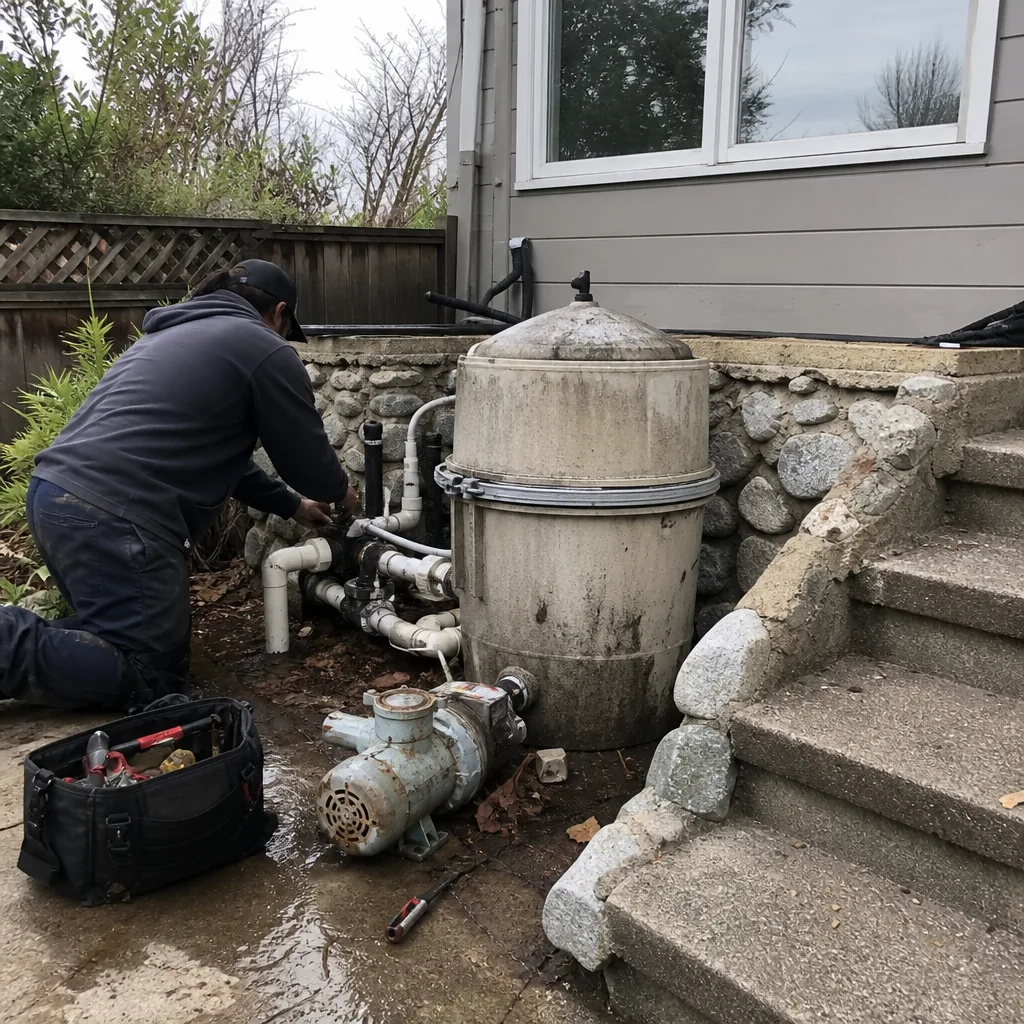
- Clear surface drains and French drains with a hose jet. Even if the grate looks clear, the pipe may be packed with silt and roots. Run a hose down the drain at full pressure and watch whether the water comes out the other end. If it doesn’t, you have a clogged line. A plumber or drainage contractor can jet the line clean, but roots will come back, so you may need a more permanent solution.
- Roof membrane inspections. If your roof includes a manufacturer’s warranty on the membrane or underlayment, many of those warranties require periodic professional inspections. The GAF, CertainTeed, or Owens Corning system you paid extra for is conditioned on documentation. A homeowner who never inspects the roof until it leaks has already voided parts of the warranty.
- Gutter guard cleaning cycles. Many gutter guard systems are marketed as maintenance-free. They are not, and the warranty says so in fine print. Pine needles and redwood duff collect on top of the guard and must be cleared quarterly in Santa Cruz, not annually. If the guard clogs and water overflows into the fascia, the manufacturer will deny the claim because the maintenance cycle was not followed.
- Composite deck re-coating. Composite decking is not truly zero-maintenance. Certain composite products require periodic cleaning with manufacturer-approved products, and some require re-coating with a UV stabilizer or sealant at intervals specified by the manufacturer. In Santa Cruz’s high-UV, high-moisture coastal environment, those intervals come up faster than the product’s marketing suggests.
- Window and door hardware lubrication and cleaning. Some high-end window manufacturers require documented annual cleaning and lubrication of hardware to maintain the warranty on the operable parts. Salt air accelerates corrosion, and the warranty assumes you’re doing something about it. If the mechanism seizes because you never lubricated it, that’s on you, not the manufacturer.
- Siding maintenance and paint cycles on wood-based products. Even pre-finished engineered wood siding products require the homeowner to maintain the finish on a schedule. If you let the finish fail and water gets into the board, the manufacturer will inspect the failure and likely determine that lack of maintenance caused the issue, not a manufacturing defect.
- Flashings that are still attached but no longer sealed. A homeowner sees a piece of metal. We see a joint that has separated from the surface by a quarter inch and is now siphoning water into the wall assembly through capillary action.
- Fasteners that are corrosion-stained but not yet rusted through. A homeowner sees a brown stain. We see a fastener that has entered the last 20 percent of its service life and will fail within two winters, at which point the entire section it’s holding will need to be replaced rather than just re-fastened.
- Drainage paths that have shifted over time. A homeowner sees a downspout. We see that the ground around the foundation has settled and is now sloping toward the house rather than away, turning a working drainage system into a slow water intrusion event.
- Root growth that has reached the hardscape edge. A homeowner sees a few pavers that are “sitting a little funny.” We see the leading edge of a root system that will be lifting a full section of the patio within 18 months.
- Load-path issues in decks and balconies. A homeowner sees a slightly sagging deck. We see a ledger board that is losing connection to the house rim joist and a post base that is rusting through, both of which are safety failures, not cosmetic ones.
When we rebuild a fence, we specify posts and hardware from Master Halco, Ameristar, or Jerith depending on whether the homeowner wants pressure-treated wood, ornamental steel, or a composite system. The right post and the right hardware matter more than the fence board. You can have the most beautiful redwood fence in Santa Cruz, and if the posts were set in native clay with standard hardware, it’s a 10-year fence, not a 25-year fence.
Hardscape and the Redwood Root Problem
This is the section most Santa Cruz homeowners need and almost no generic maintenance guide covers. Mature redwood trees, coast live oaks, and Monterey pines have root systems that extend well beyond the drip line. When those roots encounter a concrete walkway, a paver patio, a retaining wall, or a foundation, they don’t stop. They grow along the surface, under the surface, and through the joints. In the sandy-loam soils common around Santa Cruz, roots move fast and they move far.
Here’s what that means for hardscape maintenance, and it’s different from what an inland homeowner deals with:
For paver and hardscape systems, we work with Belgard, Unilock, Techo-Bloc, and Cambridge Pavers. The product matters, but the base preparation and the root strategy matter more. A properly installed paver patio with a compacted base and a root barrier at the treeline will last decades. The same pavers installed without those details will start moving within 3 to 5 years in a root-heavy Santa Cruz landscape.
We’ve seen too many Santa Cruz homeowners discover this the expensive way. They pour a new concrete walkway or install a paver patio, and within a few years the mature redwood 20 feet away has lifted a section. The homeowner blames the paver. The paver is fine. The construction detail was wrong for this site. Root management is part of the hardscape scope, not an afterthought.
Drainage: The System Most Homeowners Notice Too Late
Santa Cruz gets about 30 inches of rain a year, but it arrives in concentrated bursts. A single atmospheric river event can drop 4 inches in 24 hours. The soil, especially the clay-heavy soils in the upper Westside and parts of Aptos, saturates quickly and drains slowly. When drainage systems are undersized, clogged, or non-existent, water finds its own path and the failure shows up as a flooded crawlspace, a bowed foundation wall, or a patio that has become a pond.
Drainage maintenance is the most boring work on this list and the most expensive to ignore. Here’s the twice-annual routine:
If you have a redwood or oak within 20 feet of any drain line, add a root inspection to your annual list. Roots are attracted to the moisture in drain pipes. They find the joints, penetrate the pipe, and create a root mass that blocks the flow. A drain that worked fine last year can fail completely this winter because a root took hold.
Warranty-Voiding Maintenance Items You’re Probably Skipping
Most manufacturers write maintenance obligations into their warranties, and most homeowners never read them. Here are the items we see Santa Cruz homeowners skip that actually void or limit their warranty coverage. This is not a theoretical concern. When you file a warranty claim, the manufacturer’s first question is about your maintenance records.
Here’s the takeaway: a maintenance log is a warranty asset. Take photos, save receipts, write down dates. When you file a claim, you should be able to show that you did what the warranty required. Homeowners in Santa Cruz who can show this documentation get claims approved at a much higher rate.
What a General Contractor Catches That a Homeowner Misses
We want to be straightforward about this. A homeowner walking through their property sees what’s visible. A general contractor walking the same property is mentally running through the failure sequences of every trade, a process we detail further in our General Contractor Troubleshooting: Common Problems and How to Fix Them guide. We’re looking at how the roof connects to the wall, how the wall connects to the window, how the window connects to the siding, how the siding drains to the ground, and how the ground moves water away from the foundation. That’s the difference.
Here are a few specific examples of what a general contractor in Santa Cruz catches that a typical walkthrough misses:
We also catch the warranty items before they void. A homeowner doesn’t know that the gutter guard manufacturer requires quarterly cleaning in coastal environments. A contractor does, because we’ve read the warranty terms and we’ve seen the denied claims. That’s part of why we offer whole-property maintenance inspections and plans. It’s not just about catching problems. It’s about knowing which problems are coming, how fast they’re coming, and whether your existing systems are still covered by the warranties you paid for.
If you’re planning a multi-year maintenance strategy rather than a reactionary fix-it-when-it-breaks approach, our Spruce Contractors home page covers the full scope of what we can keep under one contract.
Common Mistakes to Avoid
- Inspecting only when something breaks. By the time you notice a roof leak or a siding stain, the damage has been accumulating for a year or more. The marine layer doesn’t attack your house in dramatic events. It works slowly and keeps the evidence hidden until the repair is structural rather than cosmetic.
- Using interior-grade caulk on exterior joints. We see this constantly. A homeowner re-seals a window with a $6 tube of interior latex caulk from the hardware store. In Santa Cruz’s fog-to-sun cycles, that caulk fails within one season. Exterior joints need high-quality exterior caulk rated for coastal UV and moisture exposure.
- Assuming redwood fences never rot. Redwood is rot-resistant, not rot-proof. In the ground-contact zone, especially in Santa Cruz’s damp soils, redwood posts fail just like any other wood. The difference is that they may fail in 12 years instead of 8. The maintenance requirement doesn’t disappear.
- Downspout discharge at the foundation line. This is the most common drainage failure in Santa Cruz homes and the easiest to fix. A downspout that dumps water at the base of the foundation is feeding water into the crawlspace or the footing. Extending the downspout 4 feet solves more drainage problems than any expensive system.
- Skipping the rainy-day walkthrough. You cannot identify drainage problems in dry weather. The water shows you where the system fails. If you only walk your property on sunny days, you’re inspecting the wrong half of your house’s behavior.
- Waiting to replace corroded fasteners until they actually fail. The moment a fastener shows visible rust staining, it’s time to replace it. Waiting until it breaks turns a $2 hardware replacement into a structural repair. This is especially true on fences, deck connections, and flashing clips where a failed fastener releases load to other components.
See the difference
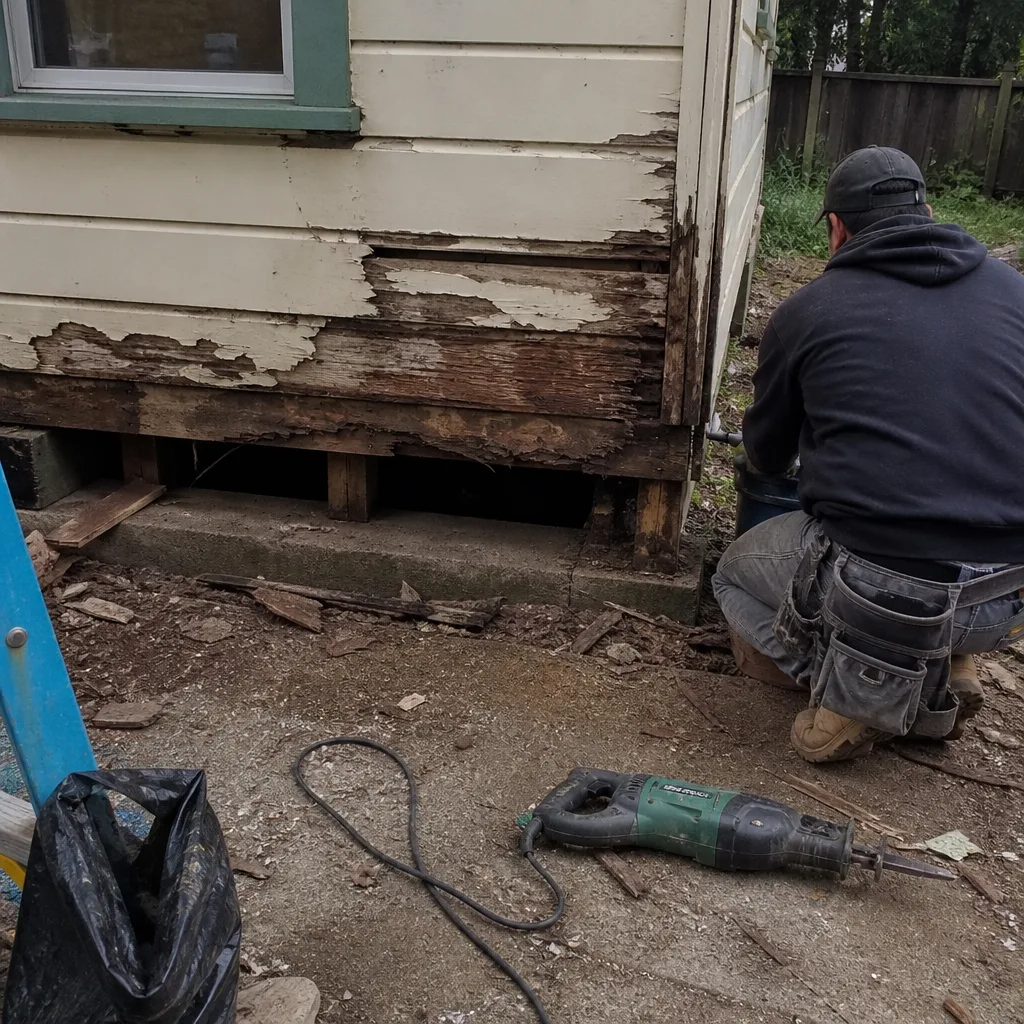 Before
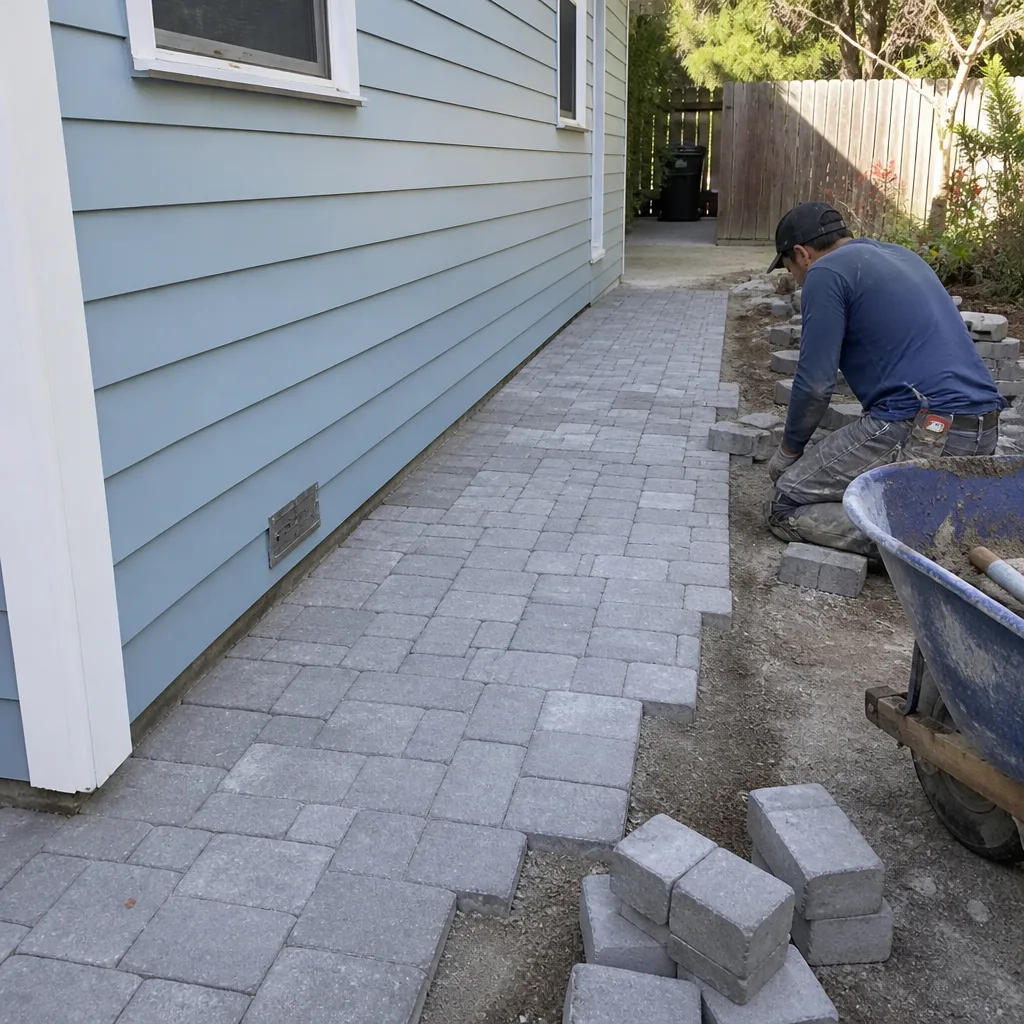 After
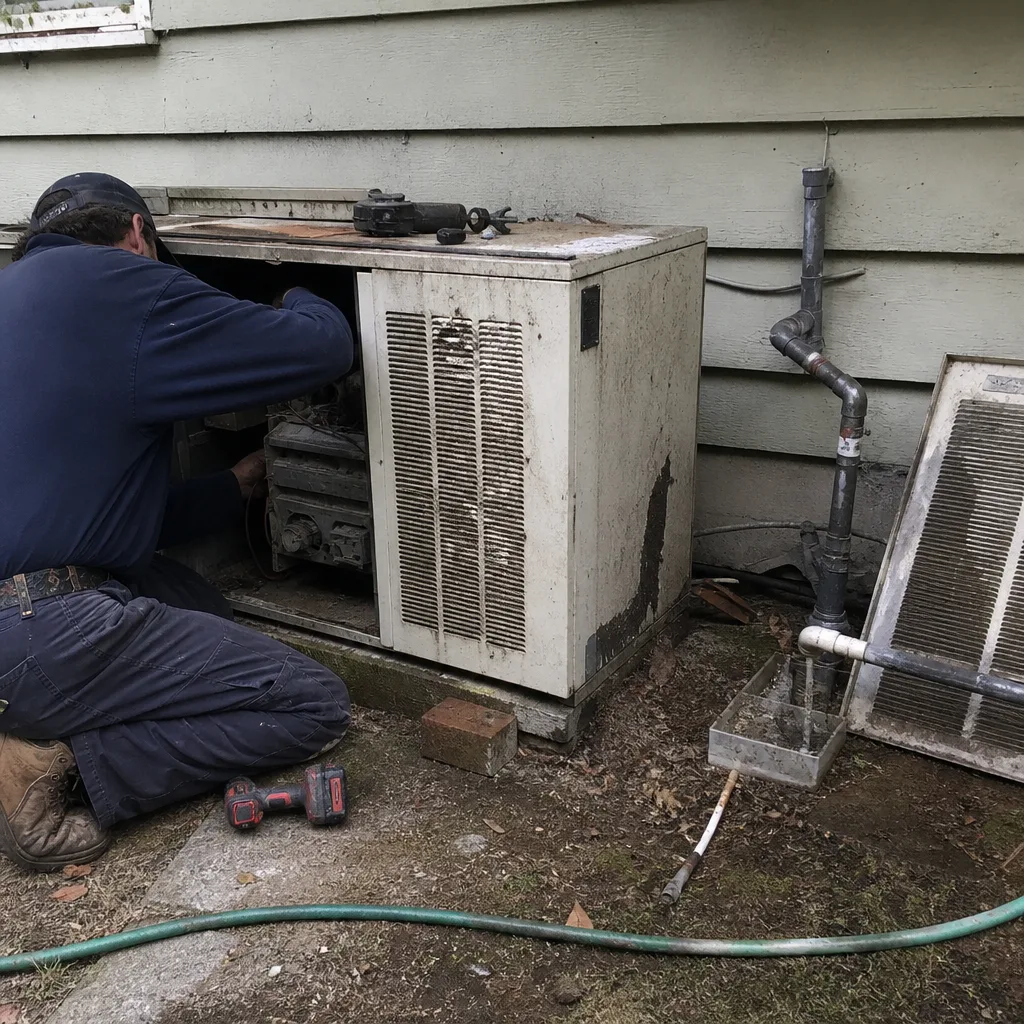 Before
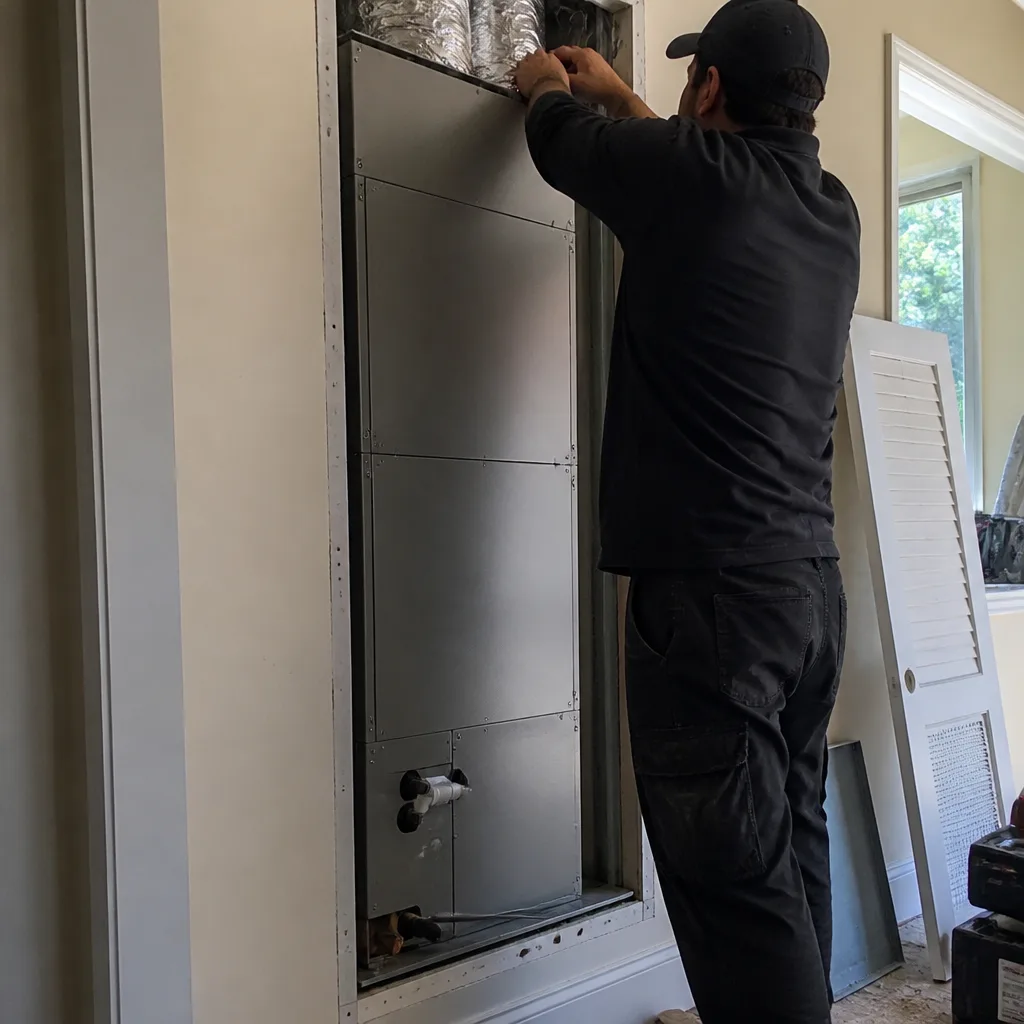 After
 Before
 After
When to Call a Professional
Some maintenance items are on the homeowner. Cleaning gutters, walking the property after rain, checking for visible peeling paint: these are within reach. But there are specific situations where calling a contractor early saves real money, and waiting costs it. If you see water stains on a ceiling, if a fence post moves when you push on it, if pavers are lifting consistently in one area, if a window is fogged, or if you notice that the ground around your foundation has started sloping toward the house, call before the problem compounds. These are early signals of failures that are already in motion. Spruce Contractors offers free estimates in Santa Cruz. Call (877) 265-5771 and we’ll walk the property with you and tell you what’s actually happening, whether that’s a maintenance issue or a bigger structural problem. For advice on selecting the right professional, see our How to Hire a Construction Contractor in Santa Cruz: A Step-by-Step Guide.
Frequently Asked Questions
Twice a year is the minimum: once in March or April before the summer fog season, and once in October before the rains arrive. Coastal homes within a mile of the bay may need quarterly attention on specific items like gutter guards, exterior caulk joints, and ground-contact hardware.
Yes. The marine layer holds salt and moisture against your home’s exterior surfaces for hours every morning during Santa Cruz’s summer months. That constant wetting and drying cycle accelerates corrosion on metals, degrades sealants faster, and promotes fungal growth on wood surfaces that never fully dry. Homes within a mile of the coast age noticeably faster than homes in inland neighborhoods like Scotts Valley or Felton.
Pricing varies based on the size of the home and the scope of the inspection, but Spruce Contractors offers free estimates for maintenance inspections and repair work in Santa Cruz. Call (877) 265-5771 and we’ll give you a written line-item quote before starting any work.
In Santa Cruz, it’s water intrusion through failed caulk joints or flashing that goes unnoticed for years, followed by drainage failures at the foundation. Both are slow-moving problems that show early warning signs, but the signs are subtle, and most homeowners don’t catch them until the repair involves structural work.
Yes. Redwood roots are extensive and they follow moisture. They won’t typically crack a concrete foundation the way some homeowners fear, but they will lift pavers, push through concrete joints, follow drain lines, and hold moisture against foundation walls. If you have a mature redwood within 20 feet of hardscape or a foundation, root management needs to be part of your maintenance plan.
In many cases, yes. Manufacturer warranties for roofing systems, engineered siding, composite decking, and gutters all include maintenance obligations. If you can’t provide documentation that you performed the required inspections and maintenance, the manufacturer may deny your claim. In Santa Cruz’s coastal environment, these maintenance cycles come up more frequently than the warranty’s general guidance suggests. Call (877) 265-5771 for help evaluating whether your home’s current maintenance schedule meets warranty requirements.
The Bottom Line
Santa Cruz homes live in a unique environment. The marine layer that makes this place beautiful is the same force that ages houses faster than the rest of the Bay Area. Your maintenance checklist should be drafted for this climate specifically, not copied from a generic seasonal home care guide. For more guides & resources tailored to coastal California homes, visit our blog. Inspect by trade, not by season. Watch the caulk joints, the flashing, the ground-contact hardware, and the drainage paths. Know which maintenance items your warranties require and document everything. And when you see something that doesn’t look right, call before it becomes structural. The difference between a $200 caulk repair and a $20,000 wall rebuild is usually one inspection cycle.
Written by the team at Spruce Contractors, serving Santa Cruz since 2014.