Last updated October 31, 2026
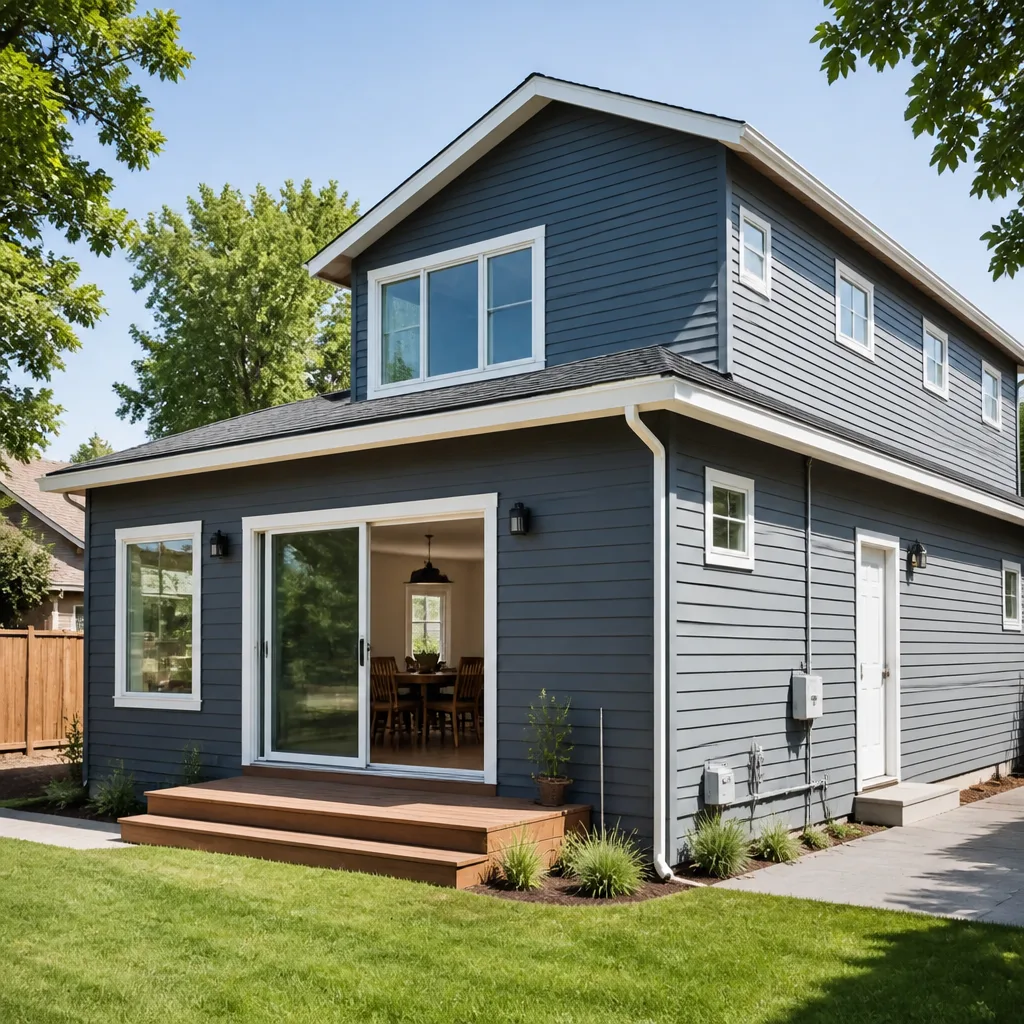 Home additions & ADU
 Kitchen remodeling
 Bathroom remodeling
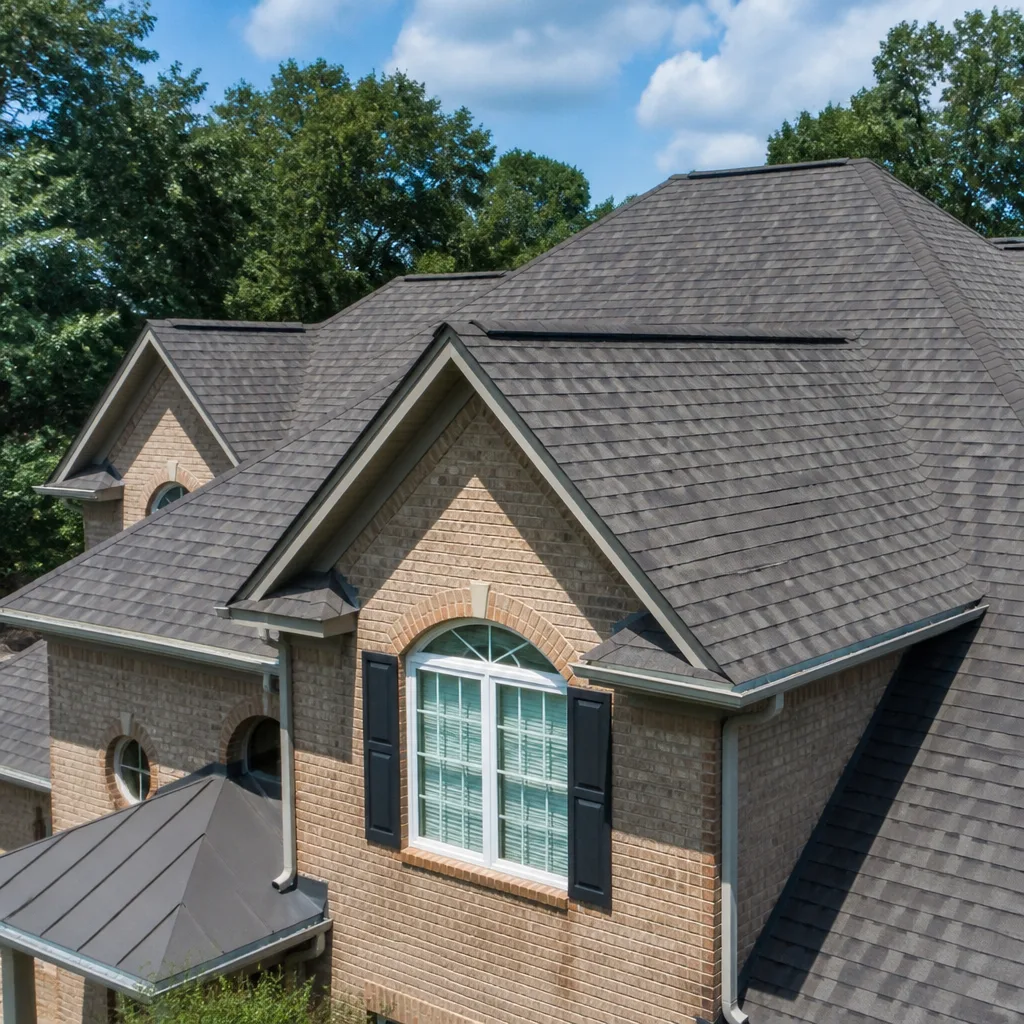 Roofing
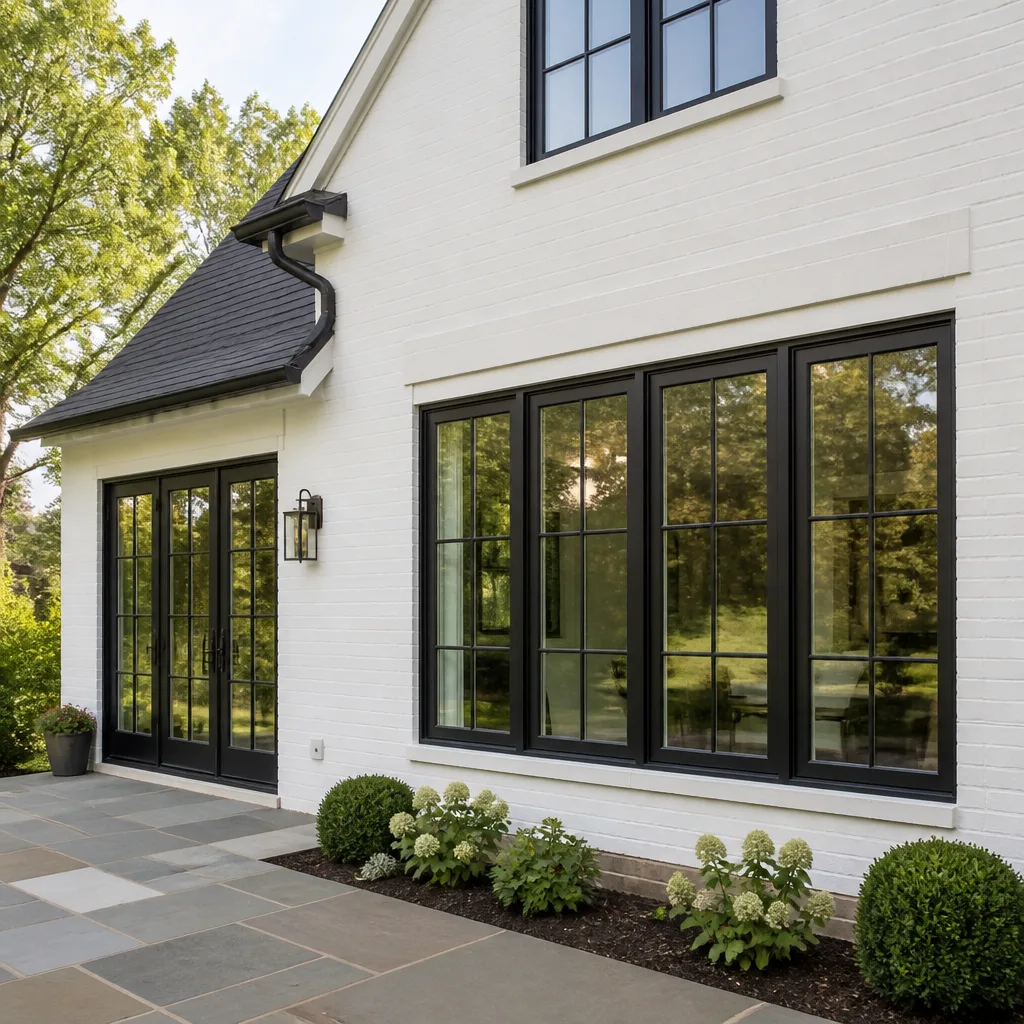 Windows & doors
 Driveway & pavers
 Fence
Free written scope consultation - allowances, timeline, and change-order rules on paper before a single trade is scheduled
Construction Emergency Preparedness Guide for Santa Cruz Homes
Santa Cruz sits inside a triangle of risk: the San Andreas Fault runs eleven miles offshore, the Santa Cruz Mountains catch embers and channel runoff, and winter atmospheric rivers routinely push 4 to 7 inches of rain through drainage systems built for half that. What surprises most homeowners is that insurance covers the event but not the failure that lets it in. A roof that lifts in 70 mph wind because the drip edge was nailed wrong. A crawlspace that floods because the grade slopes toward the foundation. After the 2017 Pasatiempo area flooding, homeowners learned that standard policies excluded surface water intrusion when a separate drainage failure was the cause. The construction decisions you make now determine whether the next storm or shake or ember storm becomes a claim or a cleanup. This guide covers the three distinct hazards Santa Cruz actually faces, plus construction warning signs every Santa Cruz homeowner should watch for, the site-level work that reduces each, and how to line up a contractor before the sirens go off.
Quick Answer
Emergency preparedness for a Santa Cruz home means matching the construction response to the specific hazard: installing code-compliant roof-to-wall connections and cripple wall retrofits for seismic risk, using Class A roofing and ember-resistant vents with defensible space for wildfire zones in the mountains, and regrading site drainage plus waterproofing the building envelope for atmospheric river flooding. The most practical step is a pre-season inspection by a licensed general contractor who can identify which of the three matters for your street, then document the condition before any event for insurance purposes. For context on construction permits, codes & inspections in CA: what you need to know, see our dedicated guide.
Styles & brands we work with
Table of Contents
- Santa Cruz Flood Risk: Site Drainage and Surface Water Intrusion
- Wildfire Ember Resistance for Mountain-Adjacent Properties
- Seismic Retrofitting and Cripple Wall Work
- Pre-Qualifying a Contractor Before an Emergency
- Post-Disaster Documentation for Insurance Claims
- Material Choices That Perform Under Load
- Permit Records and As-Built Drawings
- Seasonal Preparedness Timeline for Santa Cruz
Santa Cruz Flood Risk: Site Drainage and Surface Water Intrusion
Santa Cruz flood risk is not evenly distributed. The San Lorenzo River corridor floods from river overflow. Soquel Creek does the same through Soquel and Capitola. But the more common and less talked about problem is surface water intrusion: rain that falls on your own lot, pools against the foundation, and finds its way into the crawlspace or through a sill plate. Neighborhoods built on the old lagoon deposits between Seabright and Twin Lakes, plus the lower benches of Pasatiempo and Carbonera, see this repeatedly. The fix is rarely a sump pump added after the fact. It is site grading, drainage swales, and downspout management that move water away from the structure in the first place.
Five site-level modifications reduce Santa Cruz flood exposure measurably:
- Positive grade away from the foundation: a 5 percent slope for the first 10 feet out from the stem wall. If the grade slopes toward the house, surface water follows it every single storm.
- French drains or surface swales at the uphill property line: intercept runoff from the slope above you before it reaches the footprint.
- Downspout extensions and solid pipe to daylight: every downspout should discharge at least 5 feet from the foundation, ideally into a functioning storm drain or a planted area that can absorb it.
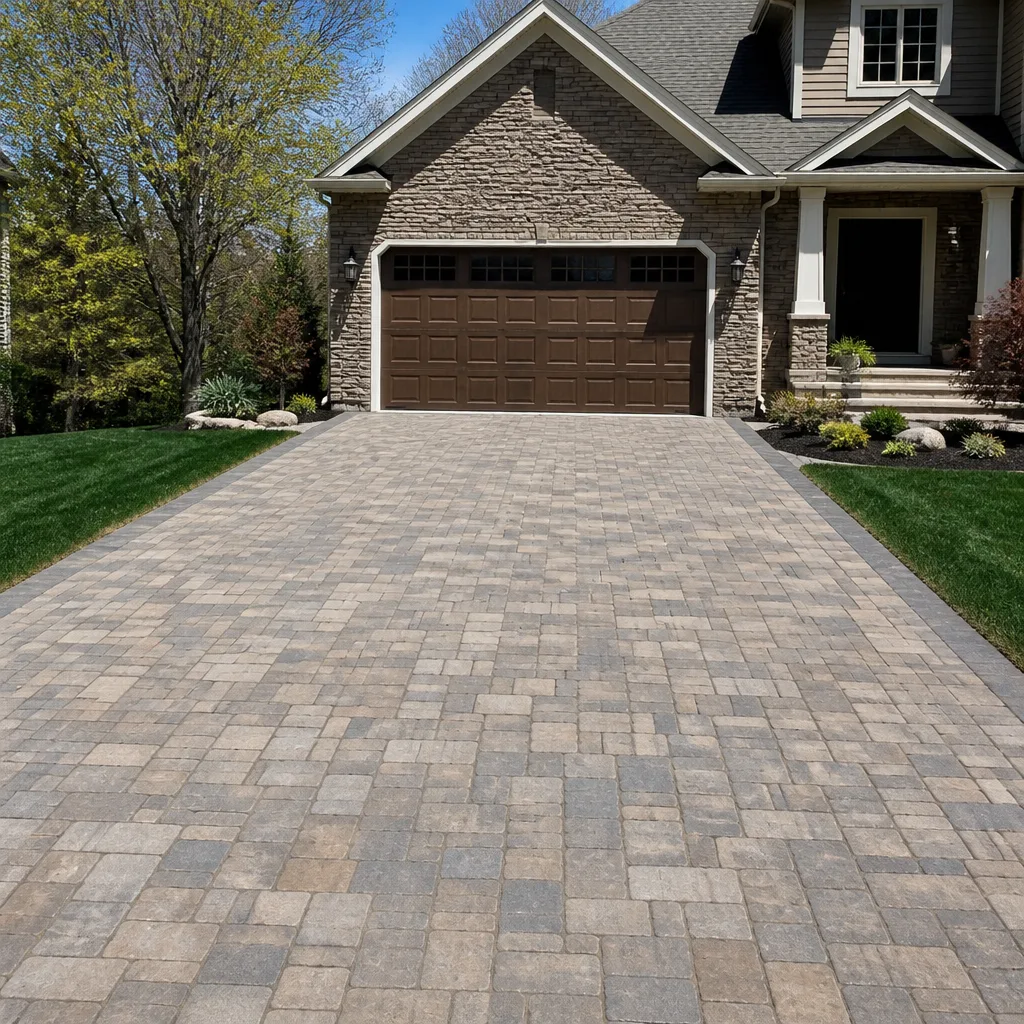
- Paver systems with permeable joints: a general contractor in Santa Cruz can install paver bases that move water through the surface rather than sheeting it toward the house. Brands like Unilock and Techo-Bloc offer permeable paver lines engineered for this.
- Crawlspace encapsulation plus a sump with battery backup: not the first line of defense, but the one that protects you when the storm overperforms.
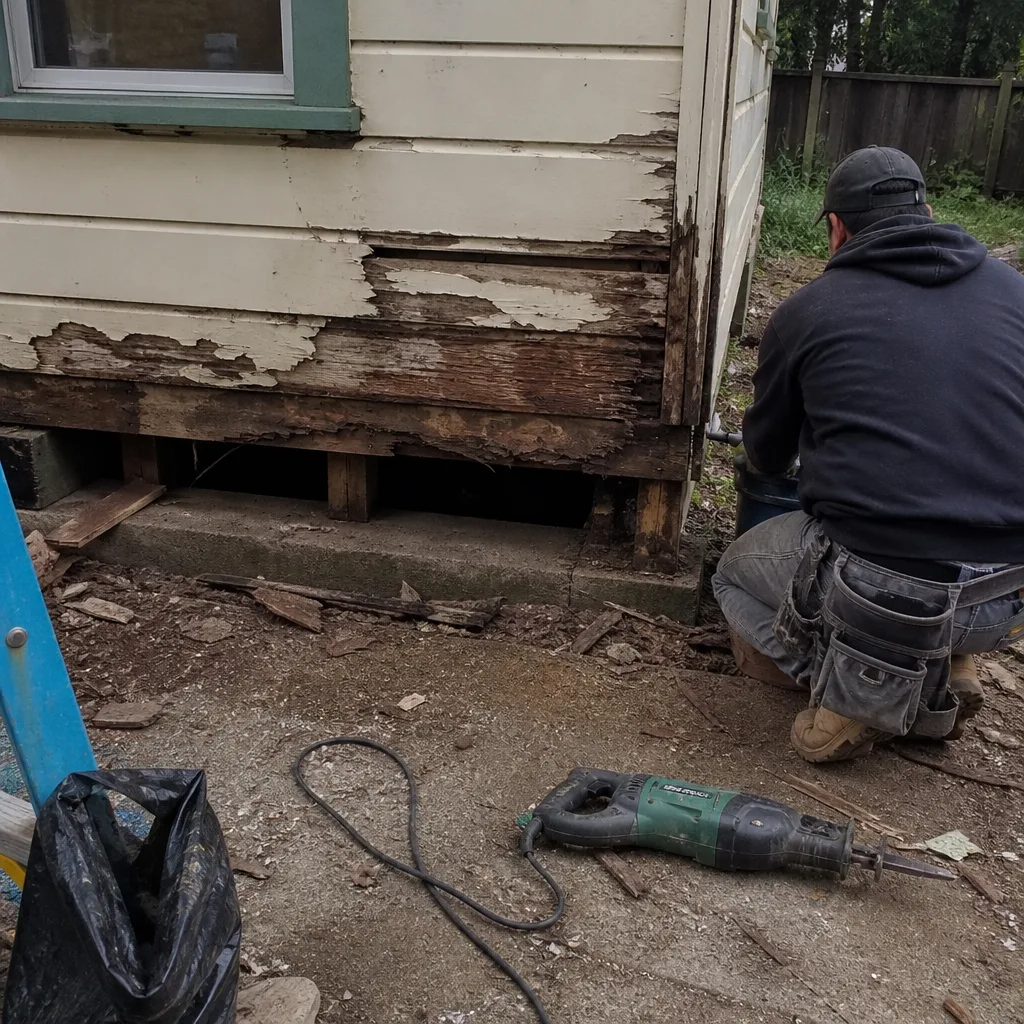
In our experience working on homes near Branciforte Creek and along Soquel Drive, the single most expensive repair after a wet winter is not the standing water itself. It is the rim joist and sill plate rot that comes from water sitting against the foundation for 48 hours. A regrade and a swale costs a fraction of that repair.
Wildfire Ember Resistance for Mountain-Adjacent Properties
The CZU Lightning Complex fire of 2020 burned 86,509 acres across the Santa Cruz Mountains and destroyed over 900 homes. The lesson that stuck with us: most homes did not burn from a wall of flame arriving at the front door. They burned from embers landing on the roof, drifting into attic vents, or collecting in the gap between a deck board and the house. CAL FIRE’s Wildland Urban Interface (WUI) building standards, codified in Chapter 7A of the California Building Code, target those exact failure points. Homes in the mountain communities of Boulder Creek, Ben Lomond, Felton, and Bonny Doon fall under these requirements. Homes in the flats below Highway 1 generally do not, though the ember exposure zone has been expanding in drier years.
The WUI construction requirements that actually matter for Santa Cruz homeowners break into four categories:
- Class A roofing: asphalt composition shingle with a fiberglass mat, standing seam metal, or tile. Class A means the roof assembly itself resists flame spread. The underlying underlayment matters as much as the visible surface.
- Ember-resistant vents: attic vents, foundation vents, and gable vents need 1/8-inch or smaller mesh covering the opening. Most older Santa Cruz mountain homes have wide-open louvered vents that collect embers like a net.
- Deck and eave construction: the underside of an attached deck within 10 feet of the house is a classic ember trap. The WUI code requires that area to be enclosed or built from non-combustible material. Flashing the eave-to-wall joint with a metal drip edge closes another common gap.
- Defensible space, not just defensible materials: CAL FIRE’s 0 to 5 foot zone immediately around the structure should have no combustible material: no wood mulch, no stacked firewood, no dry ornamental grasses. We have seen homes survive in Boulder Creek because the 5 feet around the foundation was gravel and concrete, even when the neighbors’ lots burned through.
For a deeper look at how a full-property approach protects value during fire season, the home renovation services in Santa Cruz page covers exterior-to-interior scopes. The point here is specific: ember resistance is a material and detail decision, not a lifestyle choice. You cannot rake your way out of a bad vent.
Seismic Retrofitting and Cripple Wall Work
The Loma Prieta earthquake in 1989 collapsed chimneys, snapped cripple walls, and shifted some Santa Cruz homes clean off their foundations. A significant portion of the city’s housing stock predates modern seismic code: anything built before 1980 is suspect, and pre-1960 homes are the highest priority. The specific vulnerability in these older wood-frame homes is the cripple wall, the short stud wall between the foundation and the first floor. If the cripple wall is not braced with plywood and bolted to the foundation, lateral shaking can rack the wall sideways and drop the house off its foundation in under 10 seconds of strong motion.
A standard seismic retrofit for a Santa Cruz wood-frame home involves these steps, in this order:
- Foundation inspection: verify the foundation concrete is in sound enough condition to anchor into. Crumbling 1940s concrete may need repair before any retrofit is meaningful.
- Sill plate bolting: anchor the mudsill to the foundation with epoxy-set anchor bolts, typically every 4 to 6 feet along the perimeter.
- Cripple wall bracing: shear nailing structural plywood panels to the cripple studs, converting the wall from a hinge into a rigid shear wall.
- Water heater strapping: double straps on both the upper and lower third of the tank. A toppled 40-gallon water heater will rupture the gas line in a quake. This is a $200 fix that prevents a house fire on the worst possible day.
- Chimney bracing or removal: unreinforced masonry chimneys are the single most dangerous falling object in a Santa Cruz quake. Brace with steel angles or, where the fireplace is unused, remove to below the roof line.
FEMA offers a retrofit grant program administered through the California Earthquake Authority: the Earthquake Brace + Bolt program covers up to $3,000 of the retrofit cost for qualifying older homes in high-hazard ZIP codes, which includes most of Santa Cruz County. Registration opens in late winter, funds are limited, and the program fills quickly. A licensed contractor handles the paperwork as part of the scope.
Pre-Qualifying a Contractor Before an Emergency
After a regional storm event damages 400 homes in a single weekend, every licensed contractor in Santa Cruz is booked for months. The homeowners who wait to make their first call until the emergency hits are competing with 400 of their neighbors for the same ten crews. The ones who have an established relationship with a general contractor get a response. The ones who do not get a voice mailbox. This is not hypothetical. After the January 2023 atmospheric river sequence, Santa Cruz county building permit volume spiked 60 percent year over year, and lead times for structural repairs stretched past six weeks.
Pre-qualifying a contractor works best as a pre-season routine, the same way you clean gutters or test the generator. The process looks like this:
- Request a pre-season property assessment: have a licensed general contractor walk the property with you and identify the vulnerabilities before the storm or heat event arrives. A written list of conditions serves as a baseline.
- Verify license, workers’ comp, and bonding: check the California CSLB website for active license status and any disciplinary history. Confirm the crew is insured and bonded.
- Ask for a standing estimate on the top three likely scopes: drainage correction, roof repair, and deck hardening, for example. You will not pay the exact estimate later, but having it on file means the contractor already knows your property when you call.
- Establish how emergency requests are prioritized: find out whether returning clients get priority scheduling and what the typical response time frame is after a major event. Get it in writing.
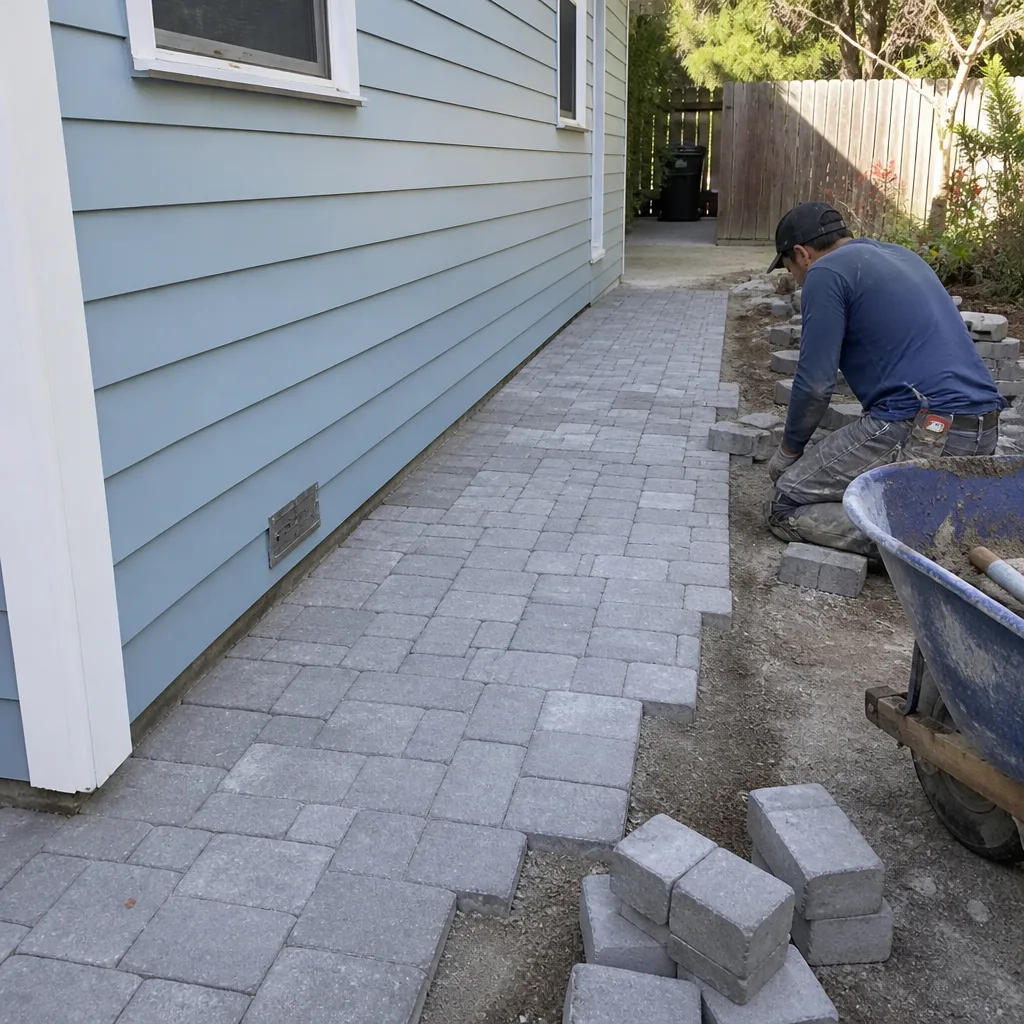
- Build the relationship on a small project: repair a fence section, replace a downspout, hardscape a short walkway with Belgard pavers. Once you are in the system as a client, emergency access changes completely.
Spruce Contractors works with more than 50 name-brand manufacturers across roofing, windows, fencing, and hardscaping, and our crews run full exterior-to-interior scopes. One contract, every trade: when an atmospheric river tears off a gutter, lifts a roof edge, and floods a crawlspace, you call one contractor instead of three. That single point of accountability matters during a regional event when everyone is scrambling. For a look at the full scope of what we manage, start with Spruce Contractors home.
Post-Disaster Documentation for Insurance Claims
The insurance claim after a Santa Cruz storm, fire, or quake is won or lost in the hours before the adjuster arrives. Documentation is not a post-event activity; it is a pre-event discipline. We tell every client the same thing: you should be able to prove what your house looked like on a Tuesday in August before the atmospheric river showed up in January. The homeowners who can are the ones whose claims process smoothly. The ones who cannot spend months arguing over pre-existing condition exclusions.
The documentation set you need is specific and chronological:
- Pre-event photo inventory: walk the property once per year and photograph every elevation, the roof from multiple angles, the crawlspace, the foundation, the deck, the fence line, and the drainage features. Date-stamp the folder.
- Contractor maintenance reports: every inspection, repair, and material replacement from your general contractor creates a trail that proves the property was maintained before the damage occurred.
- Permit records and final inspection sign-offs: any structural work done by a previous owner is only provable if the permits are in hand. The Santa Cruz County Building Department can pull permit history for your address at a customer service counter or online.
- Immediately post-event photos: take wide shots showing the entire damaged area in context, then close-ups of each separate failure point. Shoot before any temporary repairs or demolition, even if the water is still running. The image of the standing water against the foundation is the one that proves surface water intrusion.
- Contractor repair estimate with a line-item scope: insurance adjusters respond to specificity. A written line-item quote from a licensed contractor that separates labor, materials, and permitting carries far more weight than a homeowner’s description of what “probably” needs fixing.
- Keep a chronological repair log: every date, every call, every temporary patch, every invoice. If the claim is disputed, the log is your evidence.
One Santa Cruz-specific note: surface water claims are often denied unless the documentation shows the water came from a covered peril, like a storm or a sudden drainage failure, rather than long-term seepage. Your contractor’s written report before the event, noting that the drainage system was functional and properly graded, is the strongest evidence you can present. The report after the event carries less weight because it describes the problem, not the baseline.
Material Choices That Perform Under Load
The right material decision, made before an emergency, changes the claim. A roof that lasts through a 70 mph windstorm is not an accident; it is a function of the underlayment, the fastener schedule, and the drip edge detail. A fence that survives a wind event is a function of post depth and spacing. The homeowners who think through materials now are the ones whose property holds up when the event arrives.
For Santa Cruz specifically, the materials we specify for emergency resilience tend to cluster around a few decision points:
- Roofing: we install GAF, CertainTeed, and Owens Corning systems, with the manufacturer certification requirements driving the fastener pattern and underlayment selection. A GAF-certified installation means the manufacturer warranty travels with the roof, and that warranty is an asset in an insurance claim.
- Windows and doors: impact-rated products from PGT, CGI, and Therma-Tru are not just for hurricane zones. They resist wind-driven debris during Santa Cruz winter storms and seal tight against horizontal rain. The upgraded flashing details prevent the water intrusion that most storm claims are actually about.
- Siding: James Hardie fiber cement is a fire-resistant cladding that also stands up to the wet-dry cycle of a coastal climate. We specify it for both mountain wildfire zones and flood-prone flats.
- Hardscape and drainage: paver systems from Belgard, Techo-Bloc, and Unilock can be engineered with permeable joints that move water into the ground rather than toward the house. The paver itself is not the point; the base and drainage design underneath it is.
- Deck and exterior stairs: pressure-treated framing with stainless steel fasteners and metal post bases. After the CZU fire, we saw decks fail not from fire but from the rot that followed the wet winter because the original fasteners had rusted through.
We specify brands because the manufacturer’s engineering backs the installation detail. A Kohler or Moen fixture is not more flood-resistant than a generic one, but a Cambria quartz countertop will not soak up water, warp, or delaminate when a plumbing fitting fails and the kitchen floods. The material choice is a resilience choice.
Permit Records and As-Built Drawings
Santa Cruz County and the City of Santa Cruz maintain permit records going back decades, but the records are only useful if they are complete. A 1960s addition that was never permitted creates a real problem after a fire or flood: the insurance adjuster checks the square footage against the county records, finds a discrepancy, and the claim stalls. Unpermitted square footage does not always void a claim, but it gives the carrier leverage to delay or reduce payout. The fix is not to ignore the problem until an emergency exposes it.
Three steps to make your permit records emergency-ready:
- Pull the full permit history for your address from the Santa Cruz County Building Department. Compare the permitted square footage and scope against the actual house. Note every discrepancy.
- Have a contractor draft as-built drawings for any unpermitted additions or modifications. The drawings themselves do not retroactively permit the work, but they provide a documented baseline that can be referenced in a valuation.
- Consider legalizing unpermitted work through a retrofit permit where the scope is simple enough. For a deck, a water heater, or a small bathroom addition, the process is often straightforward and the long-term insurance benefit is real. A licensed contractor pulls the permit and manages the inspections.
For homeowners planning a major remodel anyway, the permit question disappears: the home remodeling process in Santa Cruz brings the entire structure into current code compliance, which as a side effect makes the insurance documentation clean. In our experience, the homeowners who pull the remodel permit before the emergency are the ones whose claims process without a single request for additional documentation.
Seasonal Preparedness Timeline for Santa Cruz
Santa Cruz has two preparation peaks: late summer for wildfire season and late fall for the first atmospheric river. Working backward from those dates gives you a practical calendar.
August through September: fire season hardening. Clear the 0 to 5 foot zone around the foundation. Inspect attic and foundation vents for ember mesh. Walk the roof and check for loose ridge caps, lifted shingles, and accumulated leaf litter in the valleys. Confirm the deck underside is enclosed or fire-rated. Pre-qualify a contractor and get the property assessment on file.
October through November: storm season hardening. Clean gutters and downspouts, then test them with a hose to confirm water flows out and away. Walk the drainage path from each downspout and confirm no water pools against the foundation for more than an hour after rain. Inspect the crawlspace for standing water or damp rim joists. Repair any cracked caulking or flashing around windows and doors. Pull the permit history if you have not done it already.
December through February: storm response window. During the first heavy rain, walk the property while water is moving and watch where it sheets. Note any pooling, any gutter overflow, any foundation splash. Photograph the conditions. Email the notes to your contractor. The mid-winter observation is the most accurate diagnostic you will ever get.
March through April: seismic and drainage maintenance. Earthquake Brace + Bolt registration opens in the spring. Schedule the water heater strapping and the sill plate inspection. Repair any winter storm damage promptly so the property is back to baseline before the next fire season. The cycle compounds: a home that enters fire season with a wet crawlspace and rotted rim joist is more vulnerable, not less.
Common Mistakes to Avoid
- Assuming flood insurance covers surface water intrusion. Standard homeowners policies specifically exclude water that enters from the ground unless a covered peril caused the entry. The drainage failure is almost always classified as a maintenance issue. Regrading and swales prevent the problem; the policy just pays for the damage when prevention fails.
- Focusing only on the 100-year flood zone. Most Santa Cruz surface water damage happens outside FEMA flood zones, on hillsides and in flats where local grading directs water onto the lot. The flood map does not tell you how your property drains.
- Ignoring the ember path. Fire-resistant roofing matters, but the ember that ignites the house usually enters through an open vent, a gap in the eave, or a deck joist. A Class A roof with open vents is still a fire risk.
- Deferring the cripple wall retrofit because the house has “been fine.” An unreinforced cripple wall has never experienced a Loma Prieta-strength quake in its current condition. The house that survived 1989 was 34 years younger.
- Documenting after the event instead of before. The pre-event photo inventory and contractor report are the evidence that separates a smooth claim from a denied one. The post-event photos are almost always too late to prove the baseline.
- Calling a new contractor after the emergency instead of before. In a regional event, every qualified contractor in Santa Cruz is already booked. The relationship you build now is the one that gets you a crew then.
See the difference
 Before
 After
 Before
 After
 Before
 After
When to Call a Professional
Some preparedness work is a Saturday project: cleaning gutters, clearing the 5-foot zone, strapping a water heater. The structural work is not. For help deciding scope, see our DIY vs professional construction: the Santa Cruz homeowner’s decision guide. A licensed contractor should handle any modification that touches the foundation, the roof, the drainage system, or the building envelope. That includes regrading, crawlspace encapsulation, roof repairs, cripple wall bracing, and all permit work. The risk of an amateur-grade drainage fix or a partial roof repair is that it fails during the event, and you do not find out until the water is already in the living room. Spruce Contractors offers free estimates in Santa Cruz, and our crews handle the full exterior-to-interior scope under one contract. Call (877) 265-5771 to schedule a pre-season property assessment and get the baseline documentation in place before the next event arrives.
Frequently Asked Questions
The most common storm repair in Santa Cruz is rim joist and sill plate rot caused by surface water sitting against the foundation for 48 hours or more, followed by roof edge lifting where drip edge flashing was missing or incorrectly nailed. Call (877) 265-5771 for a free assessment of your drainage and roof edges before the next heavy rain.
Possibly, because most Santa Cruz surface water intrusion happens outside mapped flood zones on hillside lots and in flats with poor local grading, and standard homeowner’s policies often exclude that damage. The more reliable protection is site drainage work that keeps water away from the foundation in the first place.
A standard cripple wall retrofit with sill bolting for a typical 1,200 to 1,800 square foot wood-frame Santa Cruz home generally runs between $5,000 and $12,000 depending on access, foundation condition, and the number of cripple walls, and the Earthquake Brace + Bolt program covers up to $3,000 for qualifying homes. Get a written line-item estimate from a licensed contractor to confirm the scope and the grant eligibility.
A Class A roof resists flame spread on the roof surface itself, but the embers that ignite most Santa Cruz mountain homes enter through open attic vents, eave gaps, and attached deck undersides. The complete WUI hardening package includes the roof plus ember-resistant vents, enclosed eave-to-wall joints, and the 0 to 5 foot defensible zone.
Not automatically, but unpermitted square footage gives the insurance carrier leverage to delay or reduce a claim after a fire or flood because the documented property value does not match the record. Pulling the permit history, drafting as-built drawings, and legalizing simple scopes through a retrofit permit closes the gap before an emergency exposes it.
The practical answer is that you cannot, not in the first weeks after a regional event. The homeowners who get response are the ones who established a contractor relationship before the emergency, usually through a pre-season property assessment and a small project that put them in the system. Call (877) 265-5771 now to schedule the assessment and get on the books before the next atmospheric river arrives.
The Bottom Line
Santa Cruz emergency preparedness is not a checklist, it is a construction strategy matched to the hazard that actually threatens your street. Atmospheric rivers demand drainage and building envelope work. Wildfire demands ember resistance at the roof, vent, and deck level. Seismic risk demands cripple wall bracing and foundation bolting on the area’s older housing stock. The common thread is that the work happens before the event, documented by a licensed contractor, with material choices that hold up under load. The pre-season assessment, the baseline photo inventory, and the established contractor relationship cost a few hours and a modest fee. The alternative is competing with 400 neighbors for ten crews after the storm, with no documentation and a denied claim. Preparedness is a construction project. Start it now.
Written by the team at Spruce Contractors, serving Santa Cruz since 2014.